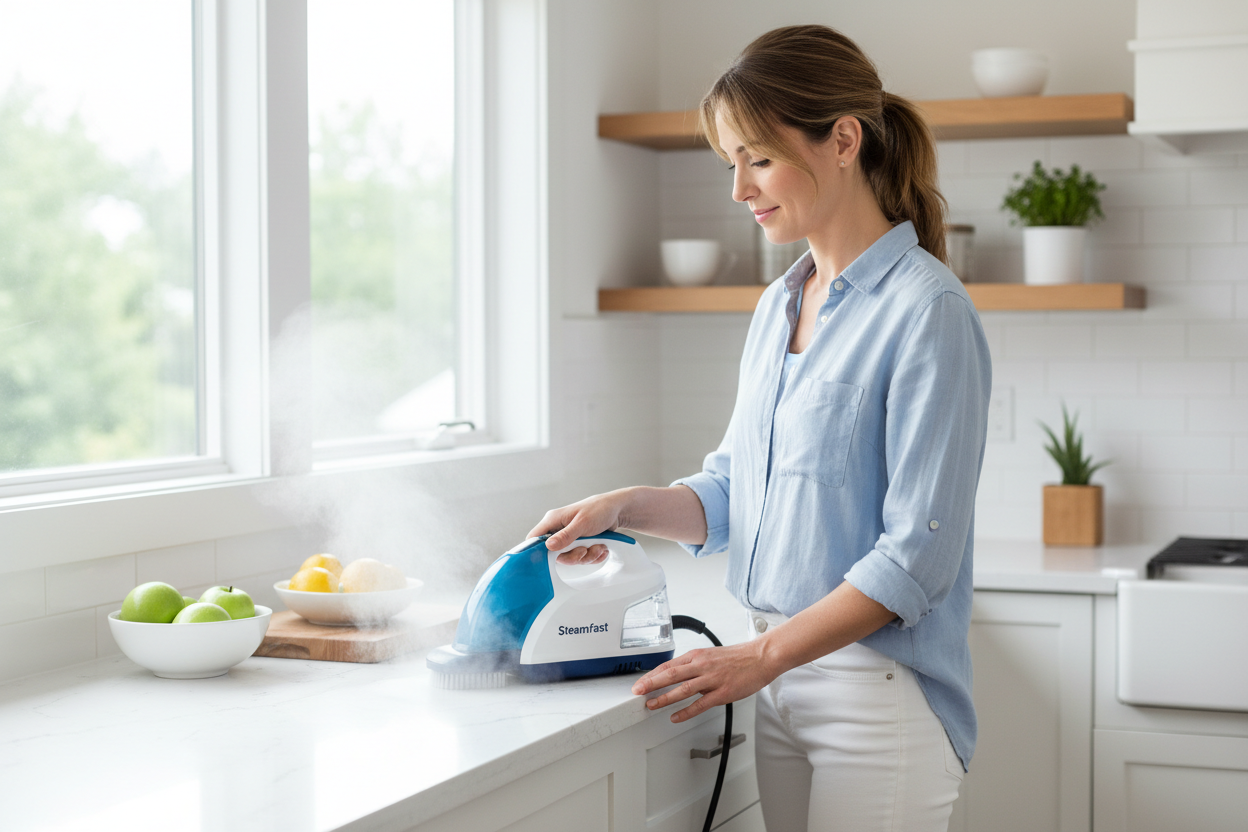
How steam cleaning technology works
A steam cleaner heats water past 200°F and forces pressurized vapor through a nozzle or mop head. That high-temperature steam breaks the bond between grime and the surface, lifts grease, and kills up to 99.9% of common household bacteria and dust mites — all without a single drop of detergent.
Because the output is just water vapor, steam cleaning is safe on sealed hardwood, tile, grout, glass, ovens, and most upholstery. There is no chemical residue left behind for kids or pets to crawl over, and no fumes to ventilate.
The real cost of chemical cleaners
The average US household spends $40–$70 per month on sprays, wipes, and floor solutions. A quality steam cleaner is a one-time purchase between $99 and $250 that runs on tap water. Over a single year, most owners break even — and everything after that is savings.
Chemical products also carry hidden costs: VOC exposure, surface dulling from repeated use, and the environmental impact of single-use plastic bottles.
Where steam wins outright
Grout lines, oven doors, shower glass, pet accidents, and mattress sanitizing are jobs where steam simply outperforms any spray. Pressurized vapor reaches into pores and crevices a cloth never touches.
For sealed hard floors, a steam mop like the Bissell PowerFresh or Shark Steam Pocket cleans and sanitizes in one pass, cutting cleaning time roughly in half compared to a sweep-then-mop routine.
When you still want a vacuum first
Steam is a finishing technology, not a debris collector. Pair a steam cleaner with a strong cordless stick vacuum to remove dry soil first — then steam to sanitize. That two-step system is what professional cleaners use, and it's why we curate both categories at VoltSweep Home.